Health Risk Assessment: What It Measures, How to Read It, and How to Take One Free
Most people meet a health risk assessment through an employer portal and forget it in a week. Used properly it is the cheapest, fastest way to find out which two habits are costing you the most years — and to prove, twelve weeks later, that you fixed them.

A health risk assessment is a compression algorithm. It takes the sprawling, messy record of how you live and squeezes it into a small number of scores that predict what is most likely to go wrong, and when. The value is not the score itself — it is the ranking underneath it, which tells you where the next twelve weeks of effort should go.
The 60-second answer
- • A health risk assessment (HRA) converts habits, history and measurements into a risk score plus domain-level scores.
- • It is a prioritization tool, not a diagnosis — it tells you what to work on and what to raise with a clinician.
- • The highest-weight inputs are smoking, cardiorespiratory fitness, sleep, waist circumference, blood pressure, and glucose control.
- • Read the domain scores before the headline number; the two lowest domains are the plan.
- • Retest every 8–12 weeks while actively changing habits.
- • Start free: the Aevon Health Assessment takes about three minutes and adds a biological age estimate.
What a health risk assessment actually is
The format dates to occupational medicine in the 1970s, when insurers wanted a cheap way to identify who in a workforce was heading toward a cardiac event. The method has not fundamentally changed: collect self-reported behaviors and a handful of biometrics, run them against population risk tables built from long-running cohort studies, and return an estimate of risk relative to peers of the same age and sex.
What has changed is the output. Older HRAs returned a single "health age" and a printed leaflet. Modern assessments return a composite score plus a decomposition — how you score on sleep, on aerobic capacity, on nutrition, on stress load, on metabolic markers — which is the part that changes behavior. A person told "your risk is elevated" does nothing. A person told "your sleep domain is in the bottom decile and it is dragging four other scores with it" has a task.
The three types you will encounter
| Type | Inputs | Cost / time | Best for |
|---|---|---|---|
| Employer / insurer HRA | History, habits, sometimes biometric screening | Free · 10–20 min | Premium incentives, population reporting |
| Lifestyle / longevity assessment | Sleep, fitness, nutrition, stress, energy, habits, waist, resting HR | Free · 3 min | Finding your weakest domains and retesting often |
| Clinical risk calculator | Blood pressure, lipids, glucose, A1c, smoking status | Lab cost · days | Absolute 10-year cardiovascular or diabetes risk |
These are complements, not substitutes. The clinical calculators are precise but silent on cause; they will tell you your ten-year cardiovascular risk without mentioning that you sleep five and a half hours. The lifestyle assessment is less precise but prescriptive. Run the lifestyle one first, act on it, and let the clinical numbers confirm the trend.
The questions that carry the most weight
A well-built assessment is short because most questions add little. Ranked roughly by effect size in longitudinal cohort data, these are the ones that matter:
- Smoking status. Still the single largest modifiable input on any risk model. Nothing else on the list competes.
- Cardiorespiratory fitness. Usually captured as weekly aerobic minutes or self-rated capacity, and the strongest positive predictor of survival. See how to increase VO2 max and why Zone 2 cardio matters.
- Sleep duration and quality. Short or fragmented sleep degrades glucose control, blood pressure, appetite regulation and immune function simultaneously — which is why it drags multiple domain scores at once. Start with how to increase deep sleep.
- Waist circumference. A sharper signal than BMI because it approximates visceral fat, the metabolically active kind.
- Blood pressure and resting heart rate. Two numbers, minutes to collect, enormous predictive value. Pair with heart rate variability if you wear a tracker.
- Diet pattern. Fiber intake, protein adequacy, ultra-processed share and alcohol volume capture most of the nutritional variance. See the best diet for longevity.
- Family history. Non-modifiable, but it changes screening timelines — which is the most actionable thing an assessment can surface.
- Perceived stress and social connection. Both independently associated with mortality after adjusting for the physical factors above.
Take yours now
The Aevon Health Assessment covers ten longevity domains in about three minutes and returns a Wellness Score, a biological age estimate, and a Health Blueprint preview — free, no card required.
How to read your results
Almost everyone reads a health risk assessment wrong: they look at the composite score, feel briefly good or briefly bad, and close the tab. The composite is the least useful number on the page. It is an average, and averages hide the thing you need — the outlier.
- Find your two lowest domains. These produce more improvement per unit of effort than anything else, because scores are non-linear: moving from the bottom quintile to average yields a bigger risk reduction than moving from good to excellent.
- Check for a domain that is dragging others. Sleep is the usual culprit. Fix it and nutrition, stress, and energy scores often rise without direct intervention.
- Separate modifiable from fixed. Age, sex, and family history set your baseline and your screening schedule. Everything else is a lever.
- Convert the top two into weekly behaviors. "Improve sleep" is not a plan. "Lights out by 22:45, fixed 06:30 wake, no caffeine after 12:00" is.
- Write down today's domain scores. The retest is only meaningful against a recorded baseline.
Turning the score into a 12-week plan
The gap between assessment and outcome is execution, and execution fails when the plan is too broad. A realistic sequence that works for the majority of results we see:
- Weeks 1–2 — sleep opportunity. Fixed wake time seven days a week, 7.5 hours in bed, cool and dark room, caffeine cut-off eight hours before bed. Change nothing else.
- Weeks 1–12 — aerobic base. Three to four hours weekly at conversational intensity plus one harder interval session. This is the largest single lever on the fitness domain.
- Weeks 3–12 — resistance training twice weekly. Compound movements, progressive load. Protects muscle mass, bone density and insulin sensitivity.
- Weeks 4–12 — nutrition floor. Protein at every meal, 30 g+ fiber daily, olive oil as the default fat, eating window closed three hours before bed.
- Week 12 — retest and compare domains. Expect movement in sleep and fitness first; waist and resting heart rate follow.
If you want the same sequence expressed as a biological-age protocol, our guide to reversing biological age breaks it down week by week, and the biological age calculator explainer covers how the estimate is produced.
Where Aevon's assessment differs
Most HRAs were designed to serve the organization paying for them. Aevon's was designed to serve the person taking it, which changes three things:
- Ten longevity domains, not claims categories. Goals, sleep, nutrition, fitness, stress, energy, habits, body composition, recovery and lifestyle context — all weighted for healthspan rather than short-term claims cost.
- A biological age estimate alongside the score. An age in years is more legible than a percentile, and it moves in both directions.
- An AI Health Blueprint, not a leaflet. Your answers generate a specific protocol. Pro members extend it with biomarker-based scoring, lab uploads, and AI meal, training, supplement, sleep and stress plans.
- Built for retesting. Three minutes is short enough to repeat quarterly, which is what makes the data useful.
Common mistakes
- Answering for your best week. Score the typical week or the plan will be built for a person who does not exist.
- Fixating on the composite. The domains are the instructions; the composite is the headline.
- Working the easiest domain first. Effort should follow the lowest score, not the most enjoyable habit.
- Retesting weekly. Below eight weeks you are measuring noise and daily variance.
- Treating it as clinical clearance. An HRA never rules anything out. Persistent symptoms go to a clinician regardless of score.
- Taking it once. A single assessment is a snapshot. The value compounds with the second and third.
FAQ
Educational content only. Aevon Health is a wellness platform, not a medical provider. A health risk assessment is a risk-estimation tool, not a diagnosis. Consult a qualified clinician before making changes to medication, training, or nutrition, and seek care promptly for any persistent or acute symptoms.
Keep reading
Related from the Aevon Journal
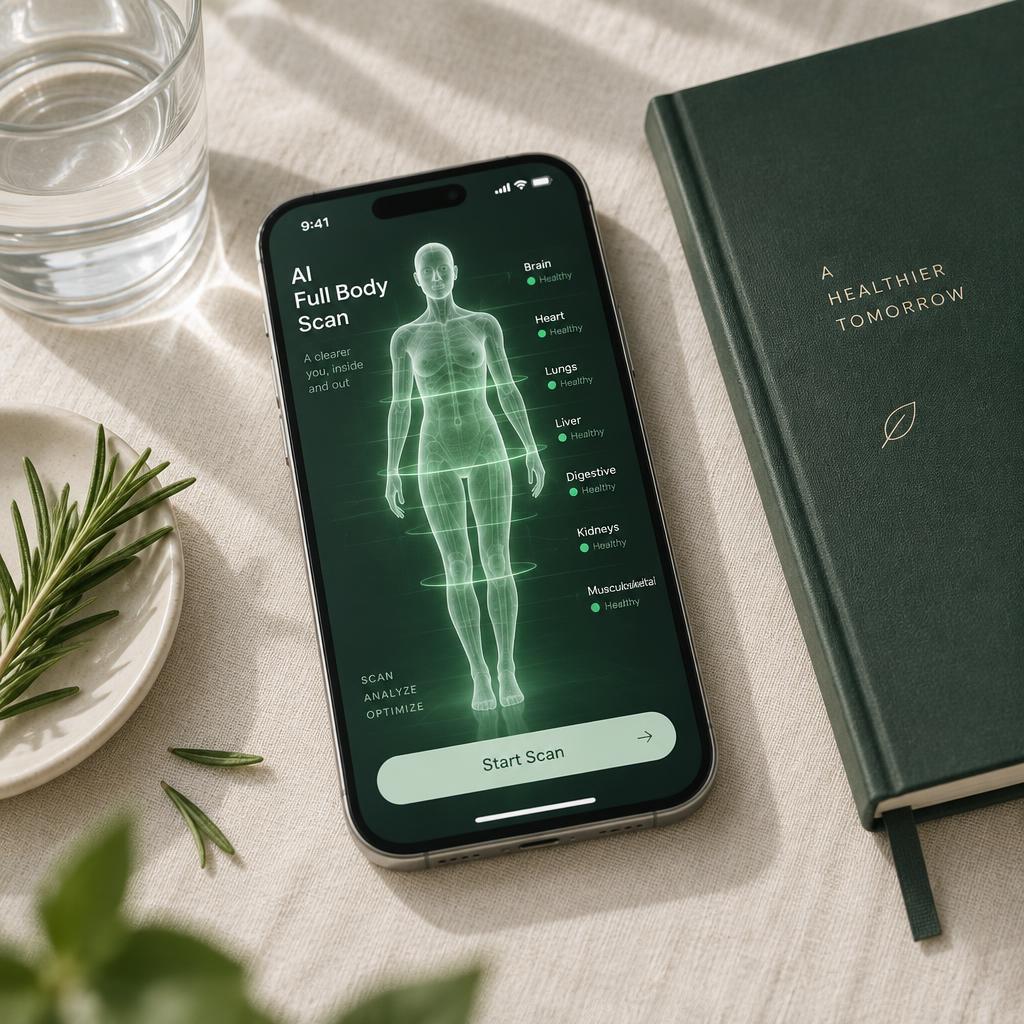
Full Body Scan: Cost, What It Shows, and Whether It's Worth It
Whole-body MRI, full body CT, DEXA and AI body scans all promise to see everything. What each one really costs, what it can and can't detect, the false-positive problem — and the free scan to run first.
Read →
Facial Analysis: What AI Can Actually Read From Your Face
A single photo holds more health information than a clipboard. How AI facial analysis measures skin, symmetry, and aging, what it reveals about your health and appearance — and how to get assessed free.
Read →
Face Age Test: How Old Does Your Face Really Look?
Face age tests are everywhere — and the science underneath them is real. How AI estimates your perceived age, why looking older than your years predicts health outcomes, and how to measure the aging that actually matters.
Read →