How to Reverse Your Biological Age: An Evidence-Based Protocol

Ten years ago, "biological age" was a marketing phrase. Today it's a measurable output of DNA methylation clocks — and it's malleable. A 2021 randomized trial published in Aging showed an eight-week integrated lifestyle protocol lowered participants' epigenetic age by an average of 3.23 years. This article is that protocol, translated.
What "biological age" actually means
Your chronological age is time elapsed since birth. Your biological age is a statistical estimate of how much you've aged based on molecular markers — most commonly DNA methylation patterns at specific sites in your genome (the epigenetic clock). Third-generation clocks like DunedinPACE and PhenoAge are the current best predictors of morbidity and mortality risk. If you're new to the topic, our biological age test comparison breaks down the three testing categories.
Can biological age actually be reversed?
The short answer is yes — with important caveats. Multiple randomized and observational trials show measured reductions of 1–3 years in 8–12 weeks. But biological age responds to inputs the way weight does: when you stop, it drifts back. Reversal is real, but the goal is a permanently slower pace of aging, not a one-time reset.
The evidence-based protocol
Every input below has direct RCT or observational-cohort support for reducing epigenetic age or slowing pace-of-aging. They are ordered by effect size per unit effort.
1. Protect 7–9 hours of sleep, nightly
Chronic sleep restriction below 7 hours accelerates every major aging clock. The Whitehall II cohort showed a doubled dementia risk in adults sleeping ≤6 hours consistently. Fix the environment first — cool room (~18°C), dark, morning sunlight within 30 minutes of waking. Our sleep and biological age deep dive covers the full circadian protocol.
2. Build cardiorespiratory fitness
Moving from a low to a high VO2 max is the single largest lifestyle lever on all-cause mortality — larger than smoking cessation. Target 3 Zone 2 sessions and 1 interval session weekly. Full protocol in How to Increase VO2 Max.
3. Adopt a Mediterranean-leaning diet
The 2020 PREDIMED-Plus and Fitzgerald et al. trials both used Mediterranean-style eating patterns. Core moves:
- 1.2–1.6 g/kg protein daily (bodyweight)
- 3+ servings of leafy greens and cruciferous vegetables
- Extra-virgin olive oil as primary fat
- Fatty fish 2–3× per week (or 2 g/day of omega-3 EPA+DHA)
- Berries, legumes, and 30 g of fiber daily
- Minimal ultra-processed food and added sugar
An 8–12 hour daily eating window (mild time-restricted eating) enhances metabolic flexibility without extreme fasting.
4. Preserve muscle mass and strength
Grip strength and lean mass are among the strongest independent predictors of longevity. Two full-body resistance sessions per week — squat, hinge, press, pull, carry — is the minimum effective dose. Add creatine monohydrate (3–5 g/day) for a well-evidenced boost to strength and cognitive resilience. For the rest of the evidence-ranked stack, see our guide to the best anti-aging supplements.
5. Manage the stress response
Chronic psychological stress accelerates epigenetic aging through cortisol dysregulation and inflammation. Daily practices that reliably move the needle:
- 10–20 minutes of meditation, breathwork, or contemplative walk
- Regular sauna use (4× weekly, 20 min at 80°C) — Finnish cohort data links it to lower cardiovascular mortality
- Consistent social connection — the Harvard Study of Adult Development found relationship quality outpredicts diet
6. Tune metabolic markers
Test annually and treat these as the biological-age dashboard:
- Fasting insulin < 6 μIU/mL
- HbA1c < 5.4%
- ApoB < 90 mg/dL (lower if you have family cardiovascular history)
- hs-CRP < 1.0 mg/L
- Waist-to-height ratio < 0.5
What the trials actually showed
Fitzgerald et al. (2021) applied a program of diet, sleep, exercise, and targeted supplementation to 43 men aged 50–72. After eight weeks, the treatment group's Horvath DNAmAge dropped 3.23 years relative to controls. The 2023 Younger You trial replicated the direction with women. The take-home isn't that eight weeks is enough forever — it's that the machinery responds fast when you give it the right inputs.
A pragmatic 12-week plan
| Weeks | Focus | Metric to hit |
|---|---|---|
| 1–4 | Sleep + Zone 2 base | Avg sleep ≥ 7.5h · 3 Zone 2 sessions/wk |
| 5–8 | Diet overhaul + strength | 1.4 g/kg protein · 2 resistance sessions/wk |
| 9–12 | Add intervals + stress protocol | 1× 4×4/wk · daily 15-min stress practice |
Frequently asked questions
How to lower biological age quickly?
The single fastest lever is fixing sleep. Restoring 7.5+ hours nightly with morning sunlight typically shows measurable epigenetic-age improvement within 8 weeks.
Which biological age test should I use?
For a low-cost start, a lifestyle-based Wellness Score is directional and free. For measured data, TruDiagnostic's TruAge and Elysium's Index are the two most-validated consumer epigenetic tests as of 2026. See our testing comparison for details.
Does intermittent fasting reverse biological age?
Mild time-restricted eating (10–12 hour windows) has supporting metabolic data. More extreme fasting protocols show promise but also risk muscle loss in older adults — proceed carefully and prioritize protein.
Biological age is a lagging indicator of daily inputs. Fix the inputs — sleep, fitness, diet, muscle, stress — and the number moves. The point isn't a lower score. It's the healthspan behind it.
Get your baseline
Estimate your biological age in 3 minutes.
Take the free assessment for a lifestyle-based biological age estimate and a personalized Health Blueprint to move it in the right direction.
Start free assessment →Keep reading
Related from the Aevon Journal
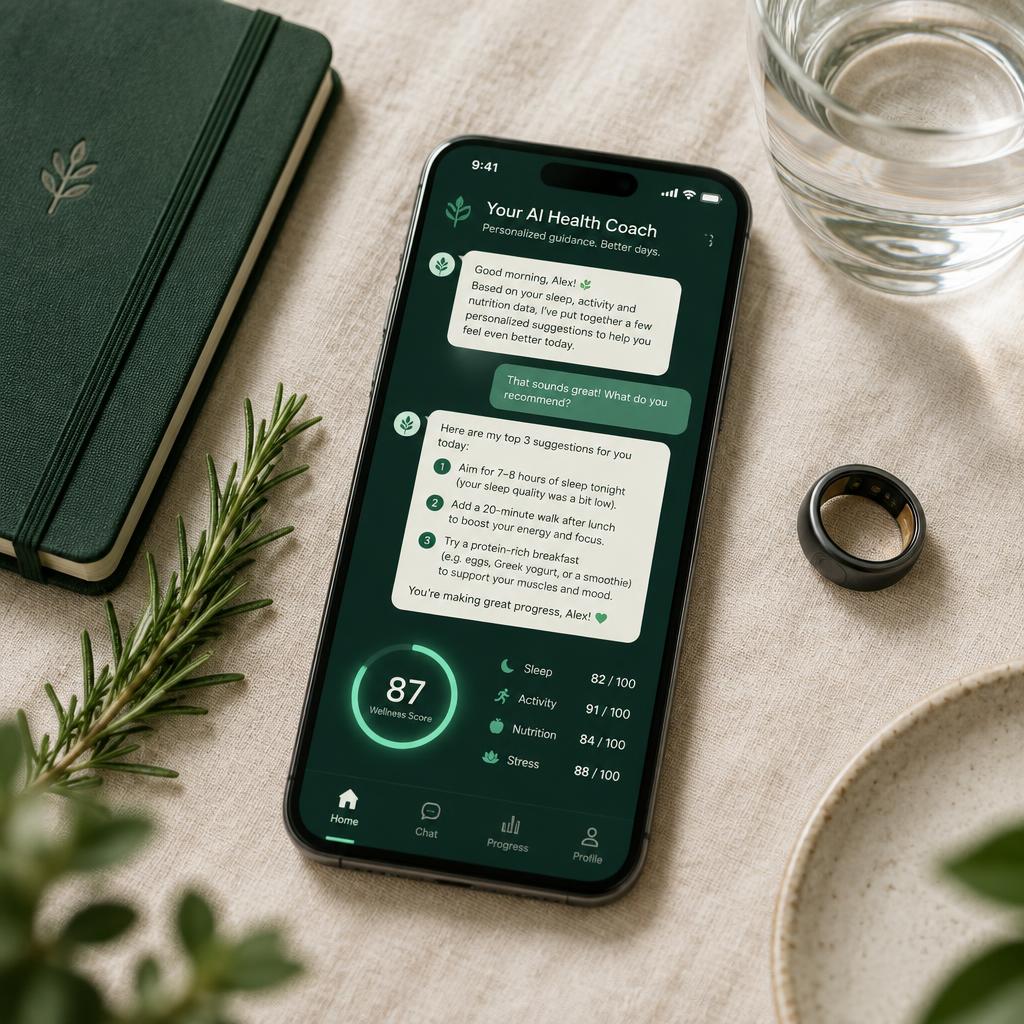
AI Health Coach: What It Actually Does and Whether You Need One
A personal trainer, nutritionist, and sleep specialist in your pocket — that's the pitch. What an AI health coach really does, what the evidence says about whether it works, where it falls short, and how to try one free.
Read →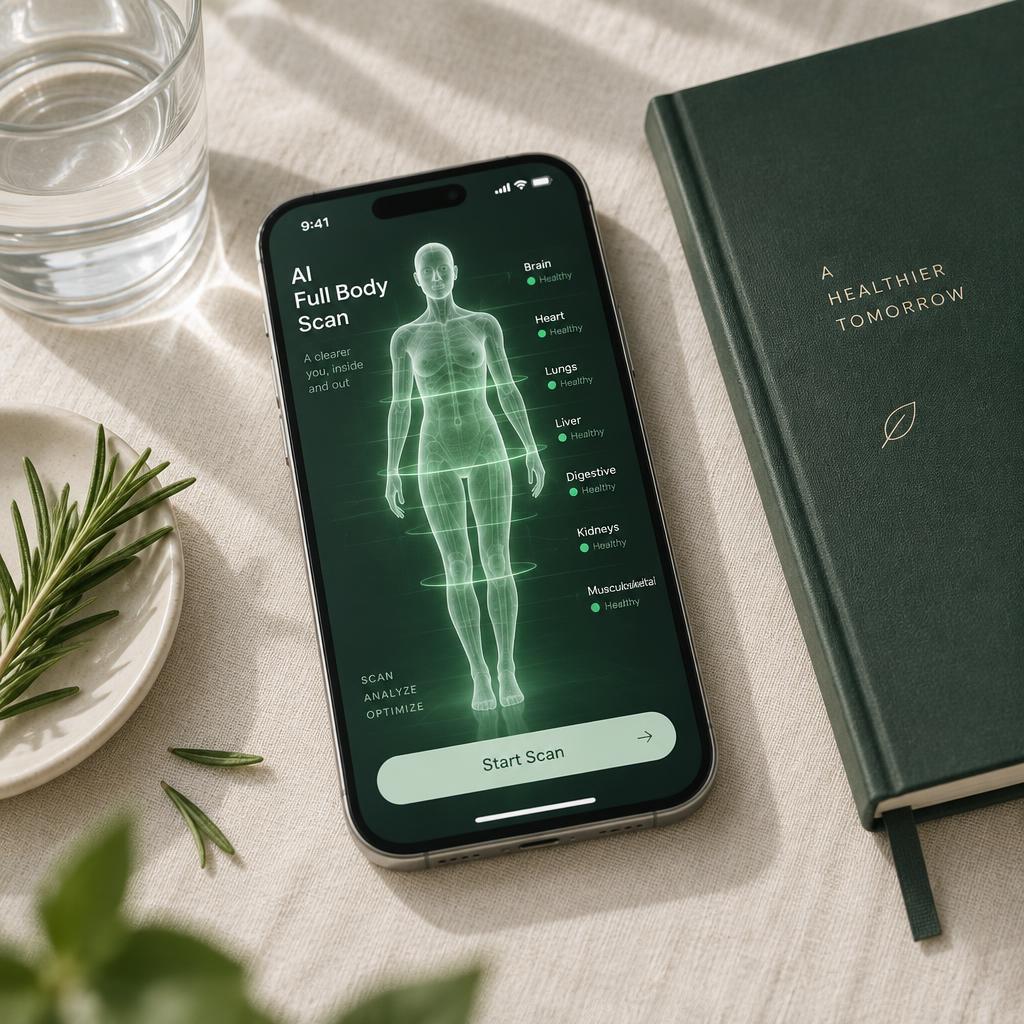
Full Body Scan: Cost, What It Shows, and Whether It's Worth It
Whole-body MRI, full body CT, DEXA and AI body scans all promise to see everything. What each one really costs, what it can and can't detect, the false-positive problem — and the free scan to run first.
Read →
Facial Analysis: What AI Can Actually Read From Your Face
A single photo holds more health information than a clipboard. How AI facial analysis measures skin, symmetry, and aging, what it reveals about your health and appearance — and how to get assessed free.
Read →