The Best Diet for Longevity: What the Science Actually Shows
Ask ten longevity researchers for the best diet for longevity and you'll get one consistent answer wrapped in ten dialects. Strip away the branding — Mediterranean, Blue Zones, MIND, pescatarian, whole-food plant-based — and the same pattern appears in every randomized trial that has ever moved a biological aging marker. This is that pattern, translated into what to buy, what to skip, and how to eat it.
The one-sentence answer
Eat mostly plants, enough protein, and almost no ultra-processed food — inside a 10–14 hour daily window. Every longevity diet with human evidence is a variation of that sentence.
What the evidence actually shows
Three trials do most of the heavy lifting:
- PREDIMED (Spain, 7,447 adults, NEJM 2013 & 2018): a Mediterranean pattern with extra-virgin olive oil or nuts reduced major cardiovascular events by 30% versus a low-fat control — the first primary-prevention diet trial to hit that endpoint.
- CENTURY & FMD trials (Longo et al.): a plant-forward, moderate-protein pattern with periodic mild caloric restriction lowered biological age markers by 2–3 years in 8–12 weeks.
- Blue Zones observational data: five geographic clusters with the world's highest concentration of centenarians share ~95% whole-food, mostly-plant intake, moderate legumes, low sugar, low processed meat.
Different foods, same architecture. That architecture is the diet.
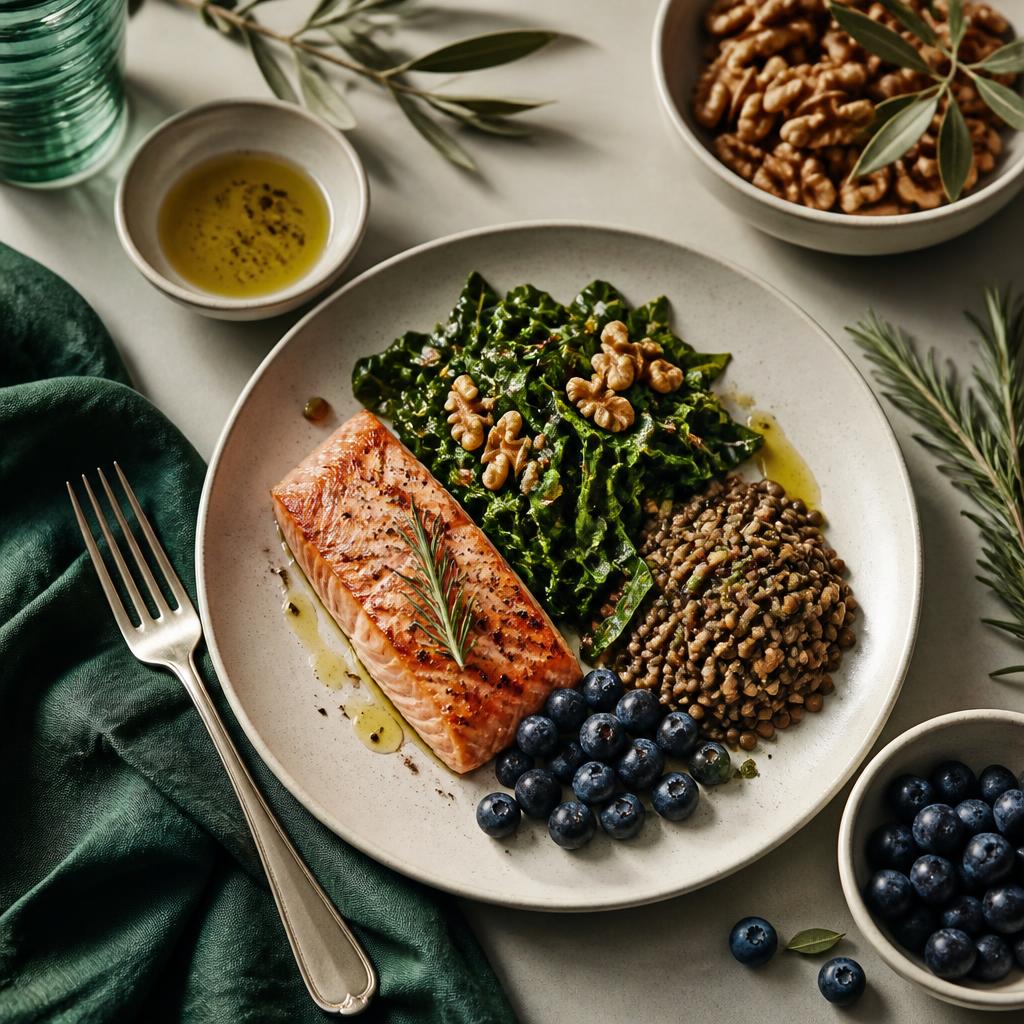
The Aevon longevity plate
A simple visual to build every meal on:
- ½ plate: non-starchy vegetables and leafy greens
- ¼ plate: quality protein (30–40g) — fish, legumes, eggs, poultry, tofu
- ¼ plate: intact whole carbs — beans, lentils, quinoa, oats, sweet potato, wild rice, whole barley
- Add: 1–2 tablespoons extra-virgin olive oil, a small handful of nuts or seeds, herbs and spices
- Drink: water, tea, coffee, occasionally wine with a meal
The 8 foods that appear in every longevity study
| Food | Why it matters | Target |
|---|---|---|
| Extra-virgin olive oil | Monounsaturates, polyphenols; PREDIMED endpoint driver | 2–4 Tbsp/day |
| Leafy greens | Nitrates, folate, magnesium; slower cognitive decline | 2+ servings/day |
| Legumes (beans, lentils) | Fiber, plant protein; the strongest single food in Blue Zones data | 1 cup/day |
| Fatty fish | Omega-3s (EPA/DHA); lower cardiovascular and dementia risk | 2–3× per week |
| Nuts & seeds | 1 oz/day reduces all-cause mortality ~20% in cohorts | 1 oz/day |
| Berries | Anthocyanins; strongest fruit for cognitive aging | ½–1 cup/day |
| Cruciferous vegetables | Sulforaphane, glucosinolates; NRF2 pathway activation | 3–5× per week |
| Fermented foods | Microbiome diversity; lower inflammatory markers (Stanford, 2021) | 1 serving/day |
Protein: the most misunderstood longevity nutrient
A common longevity mistake is under-eating protein in the name of "plant-based" — then losing muscle in your 50s and 60s, which is a bigger mortality risk than moderate meat intake. The evidence is clean:
- Under 40: 1.0–1.2 g/kg bodyweight is adequate.
- 40 and up: 1.2–1.6 g/kg to preserve muscle.
- Split evenly: 30–40g per meal, 3–4 meals, to hit the leucine threshold.
- Emphasize: fish, legumes, yogurt, eggs, poultry, tofu, tempeh.
- Minimize: processed meats (bacon, hot dogs, deli meats) — the only meat category consistently linked to worse outcomes.
What to skip (and why)
- Ultra-processed foods (UPFs). Every added serving of UPF is associated with roughly a 2–3% rise in all-cause mortality. Cutting UPFs from 60% to 20% of your intake is the single largest lever most people have.
- Sugar-sweetened beverages. Even one serving/day is associated with 20–30% higher cardiovascular mortality.
- Industrial seed oils used at scrape-the-bottom quality. The oil itself is less important than the ultra-processed food it's usually delivered inside.
- Alcohol above ~5 drinks/week. The "any is fine" story is out of date; recent Mendelian randomization data shows dose-dependent harm.
- Late-night eating. Same calories, worse metabolic effect. Close the kitchen 3 hours before bed.
Timing: the free upgrade
A 10–14 hour overnight fast — e.g. finish dinner by 8pm, first food by 8–10am — improves insulin sensitivity, autophagy markers, and sleep, with no downside. Extended fasting (18+ hours daily) has weaker human longevity data and can cost muscle mass in adults over 50. Start with the overnight window before chasing anything longer.
A sample day
- Break-fast (9am): Greek yogurt, berries, walnuts, ground flax, drizzle of olive oil, coffee.
- Lunch (1pm): Big salad — greens, chickpeas, roasted vegetables, olives, feta, grilled salmon or lentils, olive-oil-lemon dressing, whole-grain sourdough.
- Snack (4pm): Apple, small handful of almonds, green tea.
- Dinner (7pm): Wild fish or a bean stew, sautéed greens with garlic, roasted sweet potato, side of sauerkraut or kimchi, small glass of wine (optional).
Protein target: ~110–130g. Fiber: 35–45g. Ultra-processed intake: near zero. That is the diet.
How this compares to popular diets
| Diet | Longevity fit | Watch-out |
|---|---|---|
| Mediterranean | Strongest human RCT evidence | Portion creep on olive oil, bread, wine |
| Blue Zones / plant-forward | Best observational data | Protein often too low over 50 |
| Whole-food vegan | Great on inflammation, fiber | Requires B12, omega-3, iron, protein planning |
| Paleo | Cuts UPFs, adequate protein | Excludes legumes — the single best-performing longevity food |
| Keto | Useful short-term for metabolic dysfunction | Weak long-term longevity evidence; low in longevity fibers |
| Carnivore | None | No human longevity data supports it |
Supplements worth considering
A well-built plate handles most needs. A few gaps are common:
- Omega-3 (EPA/DHA): 1–2g/day if you don't eat fatty fish 2–3× weekly.
- Vitamin D3: 1,000–2,000 IU/day for most; test 25(OH)D and target 40–60 ng/mL.
- Magnesium glycinate: 200–400mg most nights; supports sleep and blood pressure.
- Creatine monohydrate: 3–5g/day; best-studied supplement for muscle and cognition after 40.
- B12: If eating little animal food.
Discuss with a clinician if you're on medications — interactions matter.
A 4-week ramp
- Week 1: Add 1 cup of legumes daily and 2 servings of leafy greens. Change nothing else.
- Week 2: Swap one ultra-processed food per meal for a whole-food alternative. Set an 8pm kitchen close.
- Week 3: Hit 30–40g protein at breakfast. Add fatty fish twice this week.
- Week 4: Track a normal day. Fiber ≥ 30g? Protein ≥ 1.2 g/kg? UPFs < 20% of intake? Adjust the smallest gap.
Four weeks in, most people report better sleep, steadier energy, and 3–6 lb of body-fat loss without counting calories.
Frequently asked questions
Is red meat bad for longevity?
Unprocessed red meat 1–2× per week from quality sources shows a much smaller signal than processed meat, which is the category with consistent harm. Skip the deli case; a good steak is fine.
Is dairy okay?
Fermented dairy (yogurt, kefir, aged cheese) tracks with better outcomes; high intake of non-fermented milk is mixed. Choose fermented as your default.
What about seed oils and inflammation?
The signal on seed oils is dominated by the ultra-processed foods they live inside. Cooking at home with olive oil, avocado oil, or a small amount of any oil is not the problem — bags of chips are.
Coffee?
2–4 cups/day is associated with lower all-cause mortality. Skip the syrups.
The best diet for longevity isn't a brand — it's a pattern. Plants first, enough protein, almost no ultra-processed food, a real overnight fast. Every longevity culture, every RCT that moved a biological aging marker, lands here.
Get personalized
Your longevity plate, calibrated to you.
Take the free assessment and get a 7-day Mediterranean-style meal plan matched to your protein target, dietary preferences, and biological age — inside your Health Blueprint.
Start free assessment →Keep reading
Related from the Aevon Journal

AI Health Coach: What It Actually Does and Whether You Need One
A personal trainer, nutritionist, and sleep specialist in your pocket — that's the pitch. What an AI health coach really does, what the evidence says about whether it works, where it falls short, and how to try one free.
Read →
Full Body Scan: Cost, What It Shows, and Whether It's Worth It
Whole-body MRI, full body CT, DEXA and AI body scans all promise to see everything. What each one really costs, what it can and can't detect, the false-positive problem — and the free scan to run first.
Read →
Facial Analysis: What AI Can Actually Read From Your Face
A single photo holds more health information than a clipboard. How AI facial analysis measures skin, symmetry, and aging, what it reveals about your health and appearance — and how to get assessed free.
Read →