Face Age Test: How Old Does Your Face Really Look — and What It Says About Your Health
Face age tests are everywhere — and for once, the viral trend has real science underneath it. Here's how AI estimates your age from a photo, why the gap between how old you look and how old you are predicts real health outcomes, and how to measure the aging that actually matters.

Upload a selfie, wait three seconds, get a number. Face age tests feel like a party trick — but the number they return turns out to be one of the oldest informal biomarkers in medicine, now quantified by deep learning. The interesting part isn't how old the algorithm thinks you are. It's what the gap between that number and your real age says about how fast you're aging on the inside.
The 60-second answer
- • A face age test uses AI to estimate how old your face looks — your perceived age — from skin texture, wrinkles, volume, and pigmentation.
- • Perceived age is a real (if crude) biomarker: looking older than your chronological age correlates with higher biological age and disease risk.
- • The biggest accelerants of facial aging are UV exposure, smoking, short sleep, stress, and high-sugar diets.
- • Your face is one organ. A full biological age assessment measures the whole body.
- • Start free: the Aevon Health Assessment returns a Wellness Score and biological age estimate in ~3 minutes — no photo required.
What a face age test actually measures
Every face age test — from research tools like the Brigham and Women's Hospital FaceAge to consumer apps — runs the same pipeline. A neural network trained on hundreds of thousands of labeled photos learns the visual signatures of aging: fine lines and wrinkles, skin texture and pore visibility, pigmentation and sun spots, loss of facial volume around the cheeks and temples, changes around the eyes, and even subtle shifts in facial proportions as bone and soft tissue remodel with age.
The model then reads your photo and outputs the age your face most resembles. Good models land within about 3–5 years of chronological age on average. But the average isn't the point — the residual is. Two 45-year-olds can score 38 and 52, and that spread carries information.
The science: perceived age is a longevity signal
Dermatologists and geriatricians have guessed patients' ages by eye for generations — and it works. In the landmark Longitudinal Study of Aging Danish Twins, nurses rated perceived age from passport-style photos, and the younger-looking twin was significantly more likely to outlive the older-looking one. Perceived age in that study tracked physical and cognitive functioning and correlated with telomere length, a cellular aging marker.
AI has sharpened the tool. Deep-learning facial age models now correlate with mortality risk and comorbidity burden in clinical populations, and researchers have used them to objectively quantify how much older or younger people look relative to their years. The consistent finding: facial age gap — perceived age minus chronological age — behaves like a summary readout of the accumulated wear on your body. Sun, smoke, sleep debt, and stress all write themselves onto the same canvas.
The five things that age a face fastest
- UV exposure. Photoaging is the single largest driver — dermatologists attribute the majority of visible facial aging to cumulative sun damage: collagen breakdown, elastosis, pigment spots, and rough texture. Daily broad-spectrum SPF is the highest-ROI anti-aging intervention that exists.
- Smoking. Smokers show measurably more wrinkling and facial aging than non-smoking twins in controlled photo studies. It restricts skin blood flow and floods the tissue with oxidative damage.
- Sleep debt. Short sleepers show more fine lines, uneven pigmentation, and reduced skin barrier recovery — plus the immediate signals (dark circles, drooping eyelids) that algorithms read as age. See how sleep debt ages you and how to increase deep sleep.
- Chronic stress. Elevated cortisol degrades collagen and impairs skin repair. Chronically high stress also shows up in the muscles of the face — tension patterns the camera reads as years.
- Diet and glycemic load. High sugar intake drives glycation, which stiffens collagen. Diets rich in protein, omega-3s, and polyphenols — the pattern in the longevity diet evidence — support skin structure from the inside.
Face age vs. biological age: the limits of a selfie
A face age test measures exactly one thing: the skin and structure of your face. It can't see your VO2 max — the strongest single predictor of all-cause mortality. It can't see your blood pressure, your HbA1c, your inflammatory markers, or your sleep architecture. Someone can look 35 at 50 while their arteries tell a different story, and the reverse is just as common.
That's why the serious version of "how old am I really" is a full biological age estimate: lifestyle inputs, cardiorespiratory fitness, sleep, and — when available — blood biomarkers combined into a single number you can track. Our comparison of lifestyle, blood, and epigenetic age tests breaks down the trade-offs. The face test is the trailer; biological age is the movie.
Before you upload your face: a privacy note
A selfie is biometric data. Before using any face age tool, check three things: whether your photo is processed on your device or uploaded to a server, whether the provider retains it or uses it to train models, and whether you can delete it. If the answers are vague, don't upload. Questionnaire-based assessments — including Aevon's — need no photo at all, which removes the question entirely.
What to do with your number
Whatever a face age test tells you, the response is the same protocol, because the inputs that age a face are the inputs that age a body:
- Protect. Daily broad-spectrum SPF 30+ on face, neck, and hands — the one intervention with decades of randomized and observational support.
- Sleep 7–9 hours. Skin repair, collagen synthesis, and growth hormone release all peak during deep sleep.
- Train. Resistance training preserves facial and skeletal muscle; aerobic fitness drives the systemic aging slope that shows up in your skin.
- Eat for repair. Adequate protein, omega-3s, colorful plants; minimize added sugar and alcohol.
- Measure what matters. Retest every 8–12 weeks with a tool that reads the whole body, not just the surface.
Free · 3 minutes · No photo needed
Go beyond the selfie: measure how your whole body is aging
The free Aevon Health Assessment scores ten longevity domains and returns your Wellness Score and biological age estimate — the number behind the face.
Take the free assessment →Frequently asked questions
This article is for educational purposes and is not medical advice. Facial age estimates are screening tools, not diagnoses. Consult a qualified clinician about any health concerns.
Keep reading
Related from the Aevon Journal
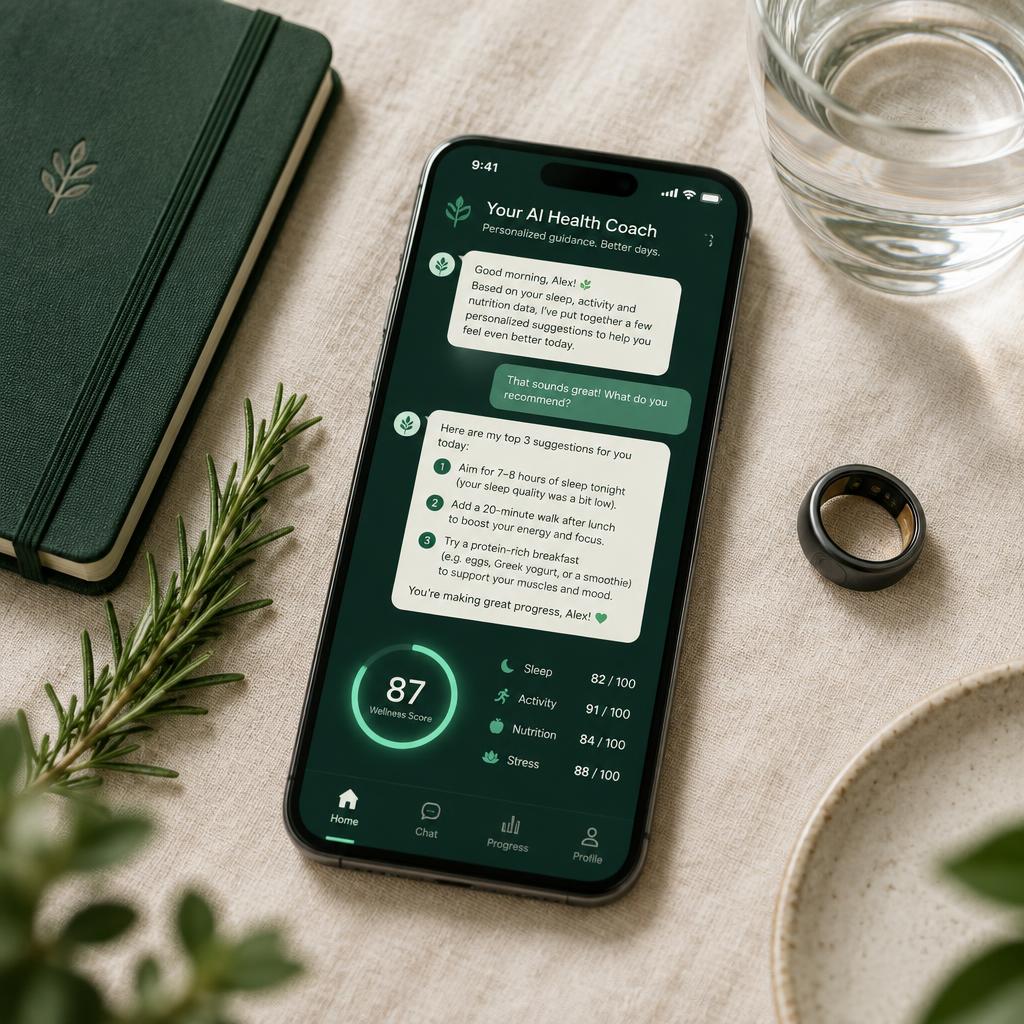
AI Health Coach: What It Actually Does and Whether You Need One
A personal trainer, nutritionist, and sleep specialist in your pocket — that's the pitch. What an AI health coach really does, what the evidence says about whether it works, where it falls short, and how to try one free.
Read →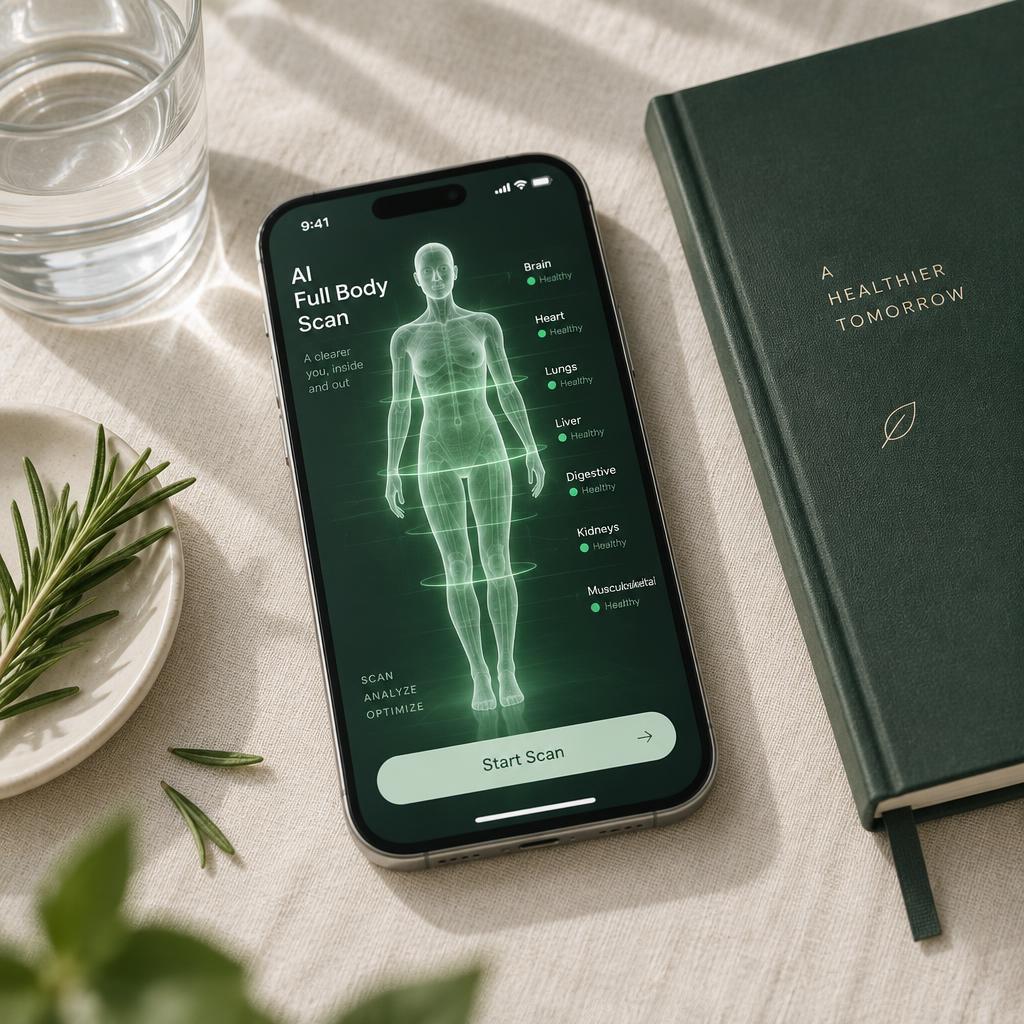
Full Body Scan: Cost, What It Shows, and Whether It's Worth It
Whole-body MRI, full body CT, DEXA and AI body scans all promise to see everything. What each one really costs, what it can and can't detect, the false-positive problem — and the free scan to run first.
Read →
Facial Analysis: What AI Can Actually Read From Your Face
A single photo holds more health information than a clipboard. How AI facial analysis measures skin, symmetry, and aging, what it reveals about your health and appearance — and how to get assessed free.
Read →