AI Longevity: How AI-Powered Longevity Intelligence Actually Works
Every wearable, lab panel and habit tracker produces data. Almost none of it changes behavior, because nobody can hold twelve variables in their head at once. That gap — between measurement and decision — is the entire job of longevity intelligence.
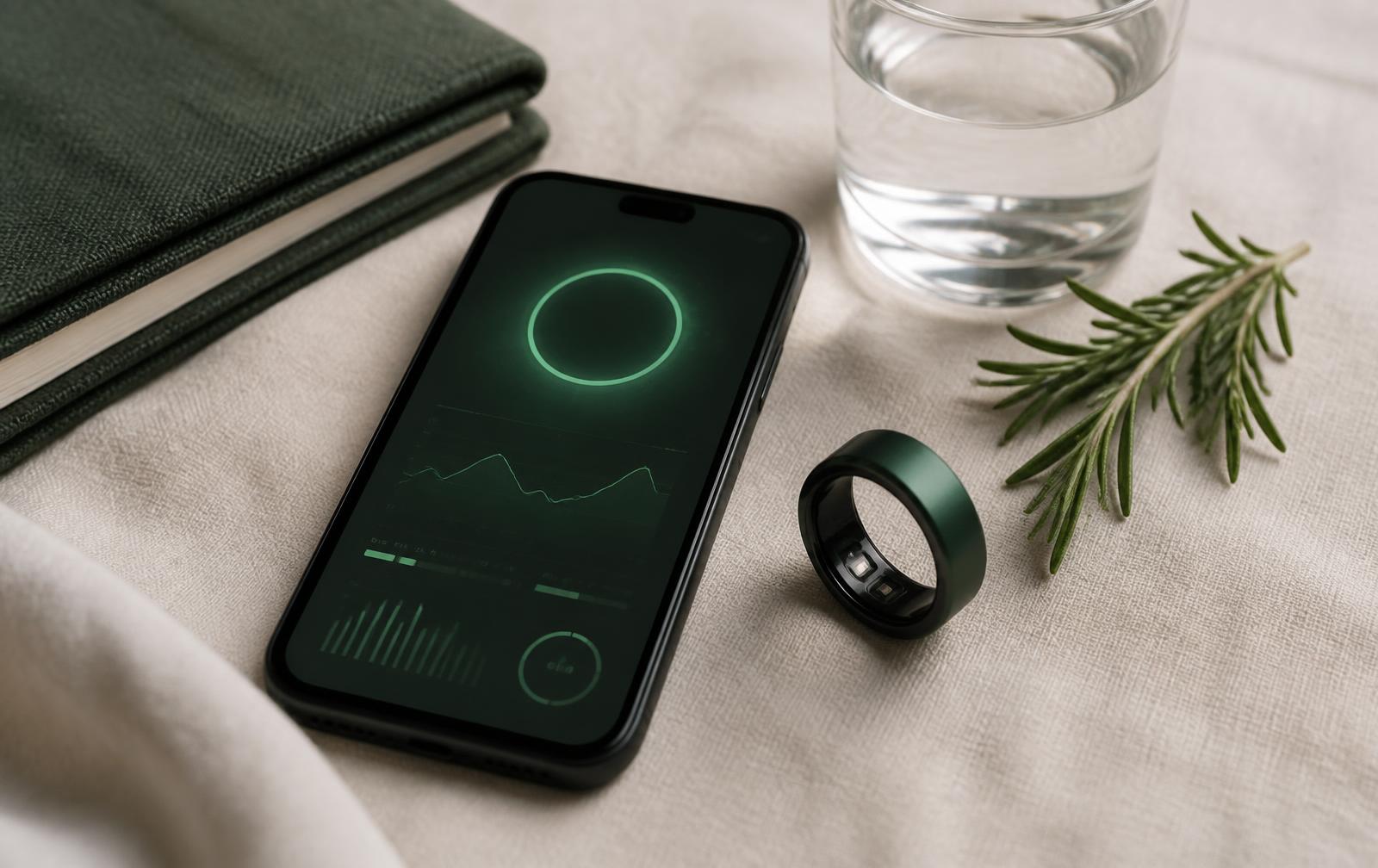
Longevity has an information problem, not a knowledge problem. We already know that cardiorespiratory fitness, sleep, muscle mass, metabolic control and social connection drive most of the variance in healthspan. What nobody can do unaided is weigh their own twelve competing signals, decide which two matter most this quarter, and notice when the answer changes. AI is good at exactly that, and bad at almost everything else people expect from it.
The 60-second answer
- • AI longevity = machine learning applied to lifestyle, wearable and lab data to estimate biological age and generate a personalized healthspan plan.
- • Its real strengths are pattern detection, risk ranking and plan generation — not lifespan prediction.
- • Four data layers: lifestyle, wearables, blood biomarkers, epigenetics. The first three carry most of the usable signal.
- • The output that changes behavior is domain-level scoring, not a single composite number.
- • It cannot diagnose, prescribe or replace a clinician — treat it as an execution layer, not a doctor.
- • Start free with the Aevon Health Assessment — three minutes, ten domains, Wellness Score plus biological age estimate.
What "longevity intelligence" actually means
Strip the marketing away and an AI longevity system does four discrete jobs. Understanding them separately is the fastest way to tell a serious product from a dashboard with a chatbot bolted on.
- Aggregation. Pulling sleep, training, nutrition, stress, body composition and lab data into one comparable structure. Unglamorous and the single biggest source of value — most people's health data is scattered across four apps and a PDF from their last physical.
- Estimation. Converting those inputs into interpretable indices: biological age, a composite wellness score, and domain scores that show where you sit relative to peers of the same age and sex.
- Prioritization. Ranking which modifiable factor will buy the most healthspan per unit of effort for you, given your current profile. This is where AI beats a generic article, because the correct next action for a sedentary sleeper is not the correct next action for a well-trained insomniac.
- Protocol generation. Turning that ranking into specifics — sets, reps, zones, grams, bedtimes, doses — and rewriting the plan when the next data cycle lands.
The four data layers
| Layer | Typical inputs | Cost | Signal quality |
|---|---|---|---|
| Lifestyle | Sleep, training, nutrition, stress, alcohol, waist, habits | Free · 3 min | Broad, prescriptive, self-report bias |
| Wearables | Resting HR, HRV, sleep stages, steps, estimated VO2 max | $200–$400 device | Objective trends, noisy day to day |
| Blood biomarkers | Lipids, HbA1c, glucose, hsCRP, albumin, ALT, creatinine, WBC | $80–$300 per panel | Strong mortality correlation |
| Epigenetics | DNA methylation arrays (Horvath, GrimAge, DunedinPACE) | $200–$500 per test | Most researched, most sampling noise |
The mistake beginners make is starting at layer four. Epigenetic clocks are fascinating and produce a satisfying number, but if your sleep is six hours and you do no resistance training, the methylation result will only tell you expensively what a three-minute questionnaire tells you for free. Our biological age test comparison walks through the accuracy and cost tradeoffs in detail, and the biological age calculator explainer covers how the estimate is produced.
What AI is genuinely good at here
Four capabilities hold up under scrutiny, and they map to the things humans are measurably bad at.
- Detecting drift in noisy trends. A three-beat rise in resting heart rate over five weeks is invisible on a daily chart and obvious to a rolling model. The same applies to declining heart rate variability and shrinking deep-sleep share.
- Weighing interacting variables. Sleep debt suppresses training quality, which suppresses VO2 max, which raises resting heart rate, which looks like a cardio problem and is actually a bedtime problem. Untangling that chain is a modeling task.
- Translating evidence into specifics. "Do Zone 2 cardio" is an article. "Four sessions of 45 minutes at 128–138 bpm, Tuesday through Sunday, progressing 10% weekly" is a plan. See Zone 2 cardio for longevity and how to increase VO2 max.
- Never losing the thread. Models remember your baseline from eleven weeks ago, your knee history, your shift schedule and your lab trend simultaneously. Consistency of context is an underrated advantage.
What it cannot do — and where the hype breaks
Being precise about limits is what separates a credible longevity platform from a liability. AI longevity tools cannot:
- Predict your lifespan. Nothing can. Population risk is not personal destiny, and any interface implying otherwise is selling a feeling.
- Diagnose. Pattern recognition on self-reported data is not clinical examination, imaging or pathology.
- Prescribe or adjust medication. That requires a licensed clinician who knows your full history.
- Handle acute symptoms. Chest pain, sudden weakness, unexplained weight loss or persistent pain go to a doctor immediately, whatever any score says.
- Fix bad inputs. Answer for your best week and you get a plan for a person who doesn't exist. Garbage in, confident garbage out.
- Escape its training data. Longevity research skews toward certain populations. Personalization narrows that gap; it does not close it.
Aevon's AI disclaimer and medical disclaimer state these boundaries explicitly — worth reading on any platform you hand health data to.
AI longevity platform vs longevity clinic
| AI longevity platform | Longevity clinic | |
|---|---|---|
| Typical annual cost | $0–$300 | $2,000–$25,000 |
| Cadence | Continuous | 1–4 visits per year |
| Can diagnose / prescribe | No | Yes |
| Imaging & advanced testing | No | Yes (DEXA, CT, VO2 max lab) |
| Day-to-day execution | Strong | Limited between visits |
They are complements. The clinic answers "is anything wrong and what should be prescribed"; the AI layer answers "what do I do on Tuesday, and is it working." Most people get more marginal healthspan from consistent execution than from another scan.
How to build your own longevity intelligence stack
- 1. Baseline in three minutes. Take the free Aevon Health Assessment across ten domains. You get a Wellness Score, a biological age estimate and a Health Blueprint preview. Answer for the typical week.
- 2. Read the domains, not the headline. Find your two lowest scores. Those are your instructions for the next twelve weeks; everything else is maintenance.
- 3. Add objective inputs. A wearable for resting heart rate, HRV and sleep staging; a standard lab panel for the metabolic and inflammatory picture. Feed biomarkers into the biological age calculator and estimate cardiorespiratory fitness with the VO2 max estimator.
- 4. Generate a protocol, not a resolution. Pro members get AI-built training, meal, supplement, sleep and stress-recovery plans generated from their own answers, plus lab-report analysis. Preview them on the Pro dashboard.
- 5. Hold the line for eight to twelve weeks. Shorter than that and you are measuring noise. Track adherence with the daily habit tracker.
- 6. Retest and let the ranking change. Retake the assessment, re-run labs, compare domain by domain. The value of longevity intelligence compounds on the second and third measurement, not the first.
Questions to ask before trusting a platform
- What data does the estimate use? A platform that won't say what feeds the number is showing you a mood ring.
- Does it show domain-level output? A single composite score is entertainment; the decomposition is the product.
- Is the evidence base cited or implied? Vague appeals to "science" are a warning sign.
- Are limits stated plainly? Serious tools tell you what they cannot do, in writing.
- Who else sees your data? Look for explicit no-sale, no-employer, no-insurer, no-model-training language and a working delete path. Ours is in the privacy policy.
- Does it improve with retesting? If the second run gives you the same generic plan, the personalization is cosmetic.
Where this is heading
The near-term trajectory is unglamorous and useful: continuous glucose and blood-pressure data joining the standard input set, cheaper multi-omic panels, and models that reason across a person's full history rather than a single snapshot. The limiting factor will not be model capability — it will be data hygiene and adherence. A model with perfect access to your biology still cannot make you sleep seven and a half hours.
Which is why the practical version of AI longevity in 2026 looks less like a digital twin and more like a very well-informed coach that never forgets your baseline: it aggregates, estimates, ranks and prescribes specifics, then checks whether it worked. That loop, run four times a year, is worth more than any single test on the market. If you want the protocol view of the same idea, read how to reverse your biological age.
Start with a baseline
Get your Wellness Score and biological age in three minutes.
Free, no card required. Ten longevity domains, an AI Health Blueprint preview, and the two changes worth making first.
Take the free assessment →FAQ
Educational content only. Aevon Health is a wellness platform, not a medical provider. AI outputs are estimates generated from the data you provide and can be incomplete or wrong. Consult a qualified clinician before changing medication, training or nutrition, and seek care promptly for any persistent or acute symptoms.
Keep reading
Related from the Aevon Journal
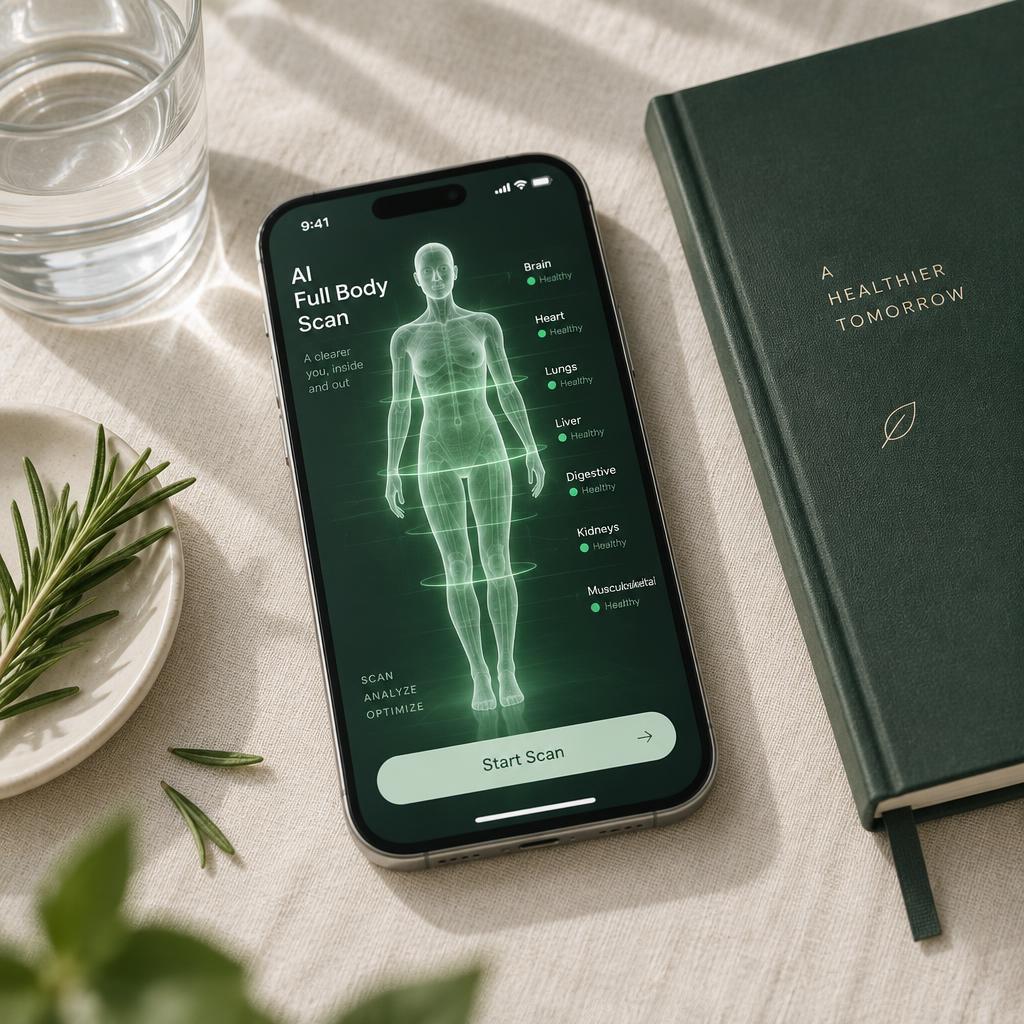
Full Body Scan: Cost, What It Shows, and Whether It's Worth It
Whole-body MRI, full body CT, DEXA and AI body scans all promise to see everything. What each one really costs, what it can and can't detect, the false-positive problem — and the free scan to run first.
Read →
Facial Analysis: What AI Can Actually Read From Your Face
A single photo holds more health information than a clipboard. How AI facial analysis measures skin, symmetry, and aging, what it reveals about your health and appearance — and how to get assessed free.
Read →
Face Age Test: How Old Does Your Face Really Look?
Face age tests are everywhere — and the science underneath them is real. How AI estimates your perceived age, why looking older than your years predicts health outcomes, and how to measure the aging that actually matters.
Read →