NR Supplement: The Complete Guide to Nicotinamide Riboside
What NR actually does, the human trial evidence, ideal dose and timing, side effects, and how it stacks up against NMN — for people who want the answer, not the marketing.
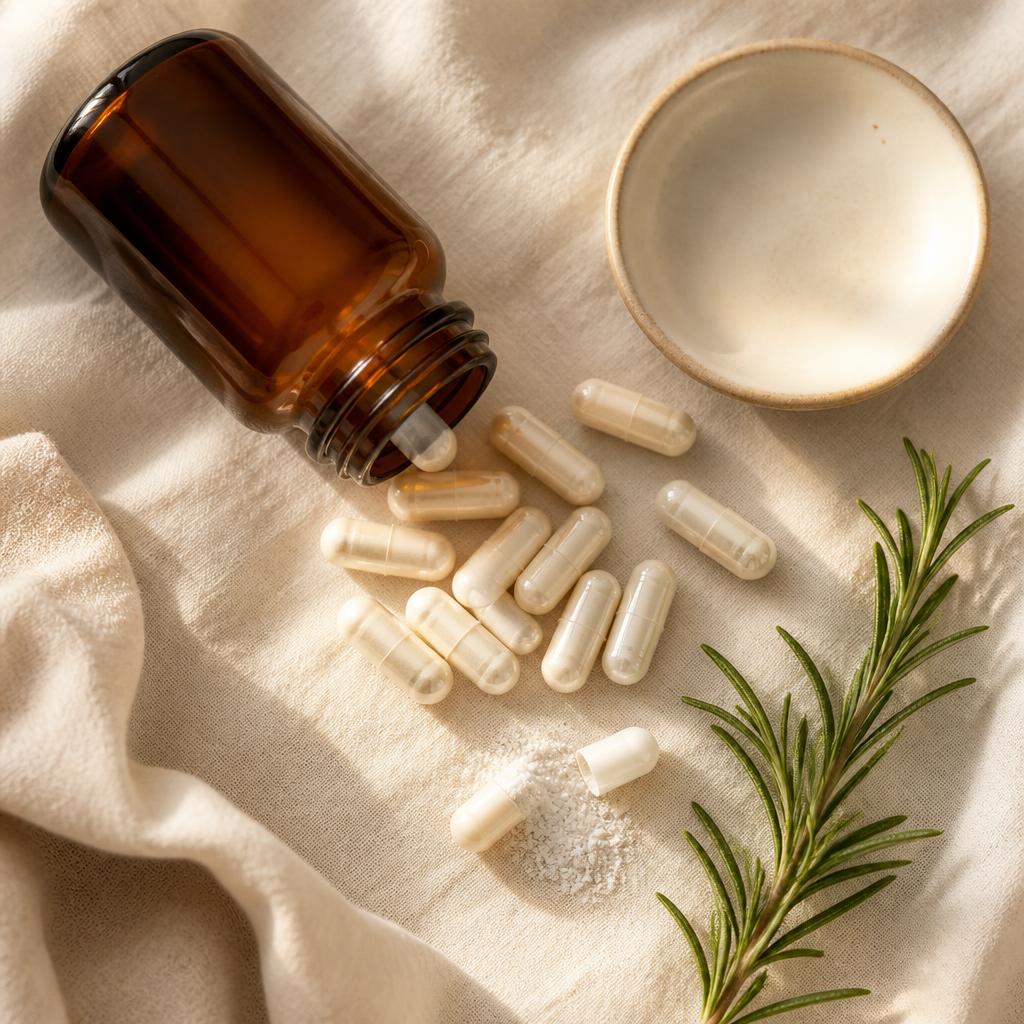
NR — nicotinamide riboside — is a form of vitamin B3 that your body converts into NAD+, the coenzyme every cell uses to make energy, repair DNA, and run the sirtuin longevity pathway. NAD+ levels drop about 50% between age 20 and 60. NR is the most human-tested way to put them back.
The 60-second answer
- • What it is: Vitamin B3 derivative, a direct NAD+ precursor.
- • Best-supported dose: 300–600 mg once daily with breakfast.
- • What it does (proven in humans): Raises NAD+ 40–90%, lowers systolic BP, reduces arterial stiffness, improves several inflammation markers.
- • What it doesn't do (yet): Proven lifespan extension in humans.
- • Safety: FDA GRAS. Well-tolerated in trials up to 12 months.
- • Skip it if: Pregnant, on chemotherapy, or under 30 with no diagnosed deficiency.
Why NAD+ matters (and why it falls)
NAD+ is not optional biology — it is the currency your mitochondria use to convert food into ATP. It also fuels two families of enzymes central to aging: sirtuins (which regulate DNA repair and metabolic stress response) and PARPs (which repair DNA damage). Both consume NAD+ as they work.
As you age, three things happen at once: you make less NAD+, you break down more (via an enzyme called CD38 that becomes overactive with inflammation), and you spend more repairing accumulated damage. The net effect is a steady decline. Cross-sectional studies of muscle and skin biopsies put the drop at roughly 50% between the third and seventh decades of life.
The obvious question — can you restore it? — was the entire reason NR was developed. Charles Brenner's lab identified NR as a distinct NAD+ precursor in 2004. Human trials began in 2016. Fifteen randomized controlled trials later, the answer is: yes, reliably.
What NR actually does in the body
NR enters your bloodstream, is taken up by cells via specific nucleoside transporters, and is phosphorylated by nicotinamide riboside kinase (NRK1/2) to nicotinamide mononucleotide, then converted to NAD+. It's a two-step, energy-efficient pathway that bypasses the rate-limiting enzyme (NAMPT) that slows down with age.
That biochemistry matters because it means NR raises NAD+ even when your endogenous salvage pathway is failing — which is exactly the state older adults are in.
The human evidence, ranked by trial quality
Marketing pages cite dozens of studies. Most are in mice. Here are the human RCTs that actually matter, in order of rigor:
| Trial | Dose · Duration | Finding |
|---|---|---|
| Martens et al. 2018 (JCI) | 500 mg × 2/day · 6 wk | NAD+ ↑60%. Systolic BP ↓ 9 mmHg in mild hypertensives. Arterial stiffness ↓. |
| Elhassan et al. 2019 (Cell Rep) | 1,000 mg/day · 3 wk | Muscle NAD+ ↑. Inflammatory cytokines (IL-6, TNF-α) ↓. |
| Dolopikou et al. 2020 | 500 mg × 2/day · acute | Improved muscle antioxidant capacity in older adults. |
| Remie et al. 2020 (AJCN) | 1,000 mg/day · 6 wk | NAD+ ↑ in muscle. No change in insulin sensitivity in already-healthy men. Null on exercise performance. |
| Brakedal et al. 2022 (Cell Metab) | 1,000 mg/day · 30 days | In Parkinson's patients: brain NAD+ ↑, clinical symptom scores ↑. |
| Conze et al. 2019 | 100 – 1,000 mg/day · 8 wk | Dose-response confirmed. No serious adverse events across arms. |
Read the pattern. NR reliably raises NAD+. It moves cardiovascular and inflammatory biomarkers in older or metabolically stressed adults. It does not appear to do much in already-healthy young athletes — a hint that NR is a replacement intervention, not a performance enhancer.
NR vs NMN vs NAD+ IV therapy
Three products, one goal — raise NAD+. Here's the honest comparison:
| Option | Cost/mo | Evidence | Verdict |
|---|---|---|---|
| NR (oral) | $30–90 | 15+ human RCTs. FDA GRAS. | Best-supported default. |
| NMN (oral) | $40–120 | Fewer human trials. Contested FDA status. | Equivalent in practice, less certain regulatory footing. |
| NAD+ IV drip | $400–1,200 | No published RCTs demonstrating durable benefit. | Expensive, unproven, uncomfortable. Skip. |
| Niacin (nicotinic acid) | $5 | Raises NAD+, but causes flushing at effective doses. | Cheap alternative if you tolerate flushing. |
How to actually take NR
The trials that produced results converged on a narrow protocol. If you're starting, copy it:
- Dose: 300 mg once daily for the first 4 weeks. Reassess. Move to 600 mg only if you tolerate it and want to match the higher-dose trials.
- Timing: Morning, with breakfast that contains fat. Late-day dosing disrupts sleep in a subset of people (likely via sirtuin-driven circadian effects).
- Stack: Add trimethylglycine (TMG) 500–1,000 mg with your NR dose. NAD+ methylation consumes methyl groups; TMG replaces them and prevents a homocysteine rise.
- Cycle: Continuous dosing is what the trials tested. There is no evidence you need to cycle off.
- Measure: A whole-blood NAD+ test (Jinfiniti, Genova) at baseline and 8 weeks tells you whether it's working for you specifically.
Who should — and shouldn't — take NR
Reasonable candidates:
- Adults over 40 with declining energy, sleep quality, or recovery.
- Anyone with mildly elevated blood pressure or arterial stiffness.
- People with metabolic syndrome or prediabetes (early evidence, not conclusive).
- Post-COVID fatigue (small trials show benefit).
Skip it if:
- You're under 30 and healthy — no evidence of benefit, and NAD+ isn't your bottleneck.
- You're pregnant or breastfeeding — no safety data.
- You have active cancer or are on chemotherapy — NAD+ fuels PARP repair, which some chemotherapies deliberately block. Discuss with your oncologist.
- You're already spending more than you can afford on supplements. Sleep, Zone 2, protein, and creatine are cheaper wins.
NR is one piece of a much bigger picture — see our evidence-ranked guide to the best anti-aging supplements for the full stack.
How to buy without getting scammed
The NR market is flooded with underdosed and misidentified products. A 2022 independent analysis found that a third of tested NR products contained less than 90% of their labeled dose. Three defenses:
- Look for Niagen. Niagen is the branded, patented NR ingredient from ChromaDex — used in nearly every published human trial. If it doesn't say "Niagen" on the label, you're not taking what the studies tested.
- Third-party testing. USP, NSF, or Informed Sport verification, or a public certificate of analysis.
- Avoid combos on the front. Products marketed as "NR complex" or "NAD+ booster blend" usually contain a fraction of the effective dose padded with cheap fillers.
Where NR fits in a longevity stack
NR is a Tier-2 intervention. That is: the human evidence is strong enough to justify it, but weaker than the Tier-1 basics (sleep, aerobic and resistance training, protein adequacy, omega-3, vitamin D, creatine). Get those right first. Then, if you're over 40 and want another lever, NR is the best-tested NAD+ precursor available.
It is not a replacement for the fundamentals. It is a small, cumulative edge — the kind of thing that, alongside two decades of steady inputs, moves the arc of your healthspan by a measurable amount.
NR supplement FAQ
Medical disclaimer. This article is for educational purposes and is not medical advice. Talk to a clinician before starting any supplement — especially if you're pregnant, taking prescription medication, or managing a diagnosed condition.
Personalize your stack
Get a supplement stack built around your biology.
Take the free 3-minute Aevon assessment and receive a personalized longevity protocol — including a supplement stack calibrated to your goals, age, and biomarkers.
Start free assessment →Keep reading
Related from the Aevon Journal

AI Health Coach: What It Actually Does and Whether You Need One
A personal trainer, nutritionist, and sleep specialist in your pocket — that's the pitch. What an AI health coach really does, what the evidence says about whether it works, where it falls short, and how to try one free.
Read →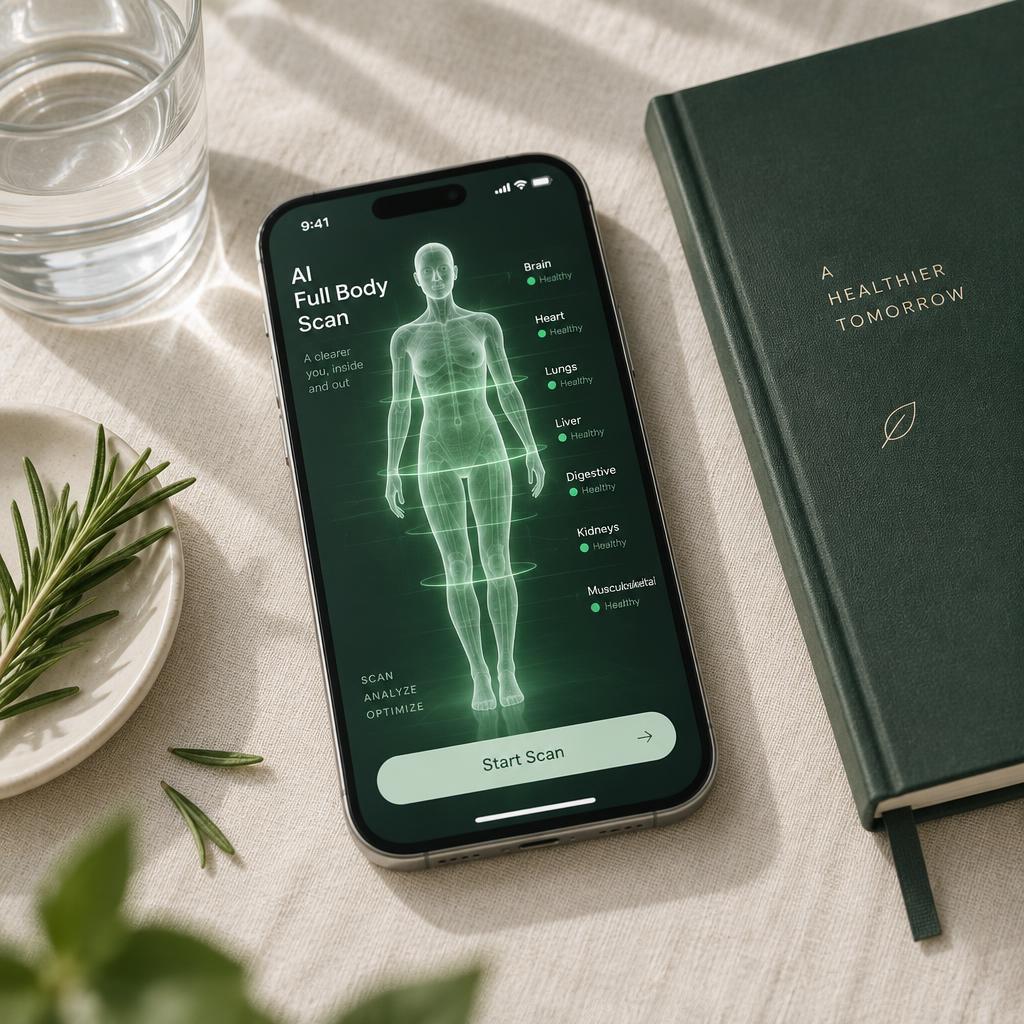
Full Body Scan: Cost, What It Shows, and Whether It's Worth It
Whole-body MRI, full body CT, DEXA and AI body scans all promise to see everything. What each one really costs, what it can and can't detect, the false-positive problem — and the free scan to run first.
Read →
Facial Analysis: What AI Can Actually Read From Your Face
A single photo holds more health information than a clipboard. How AI facial analysis measures skin, symmetry, and aging, what it reveals about your health and appearance — and how to get assessed free.
Read →